
Certificate of authenticity
Every instrument has a serial number and a certificate you can verify on this site.
Not sure which service your instrument needs?
General chat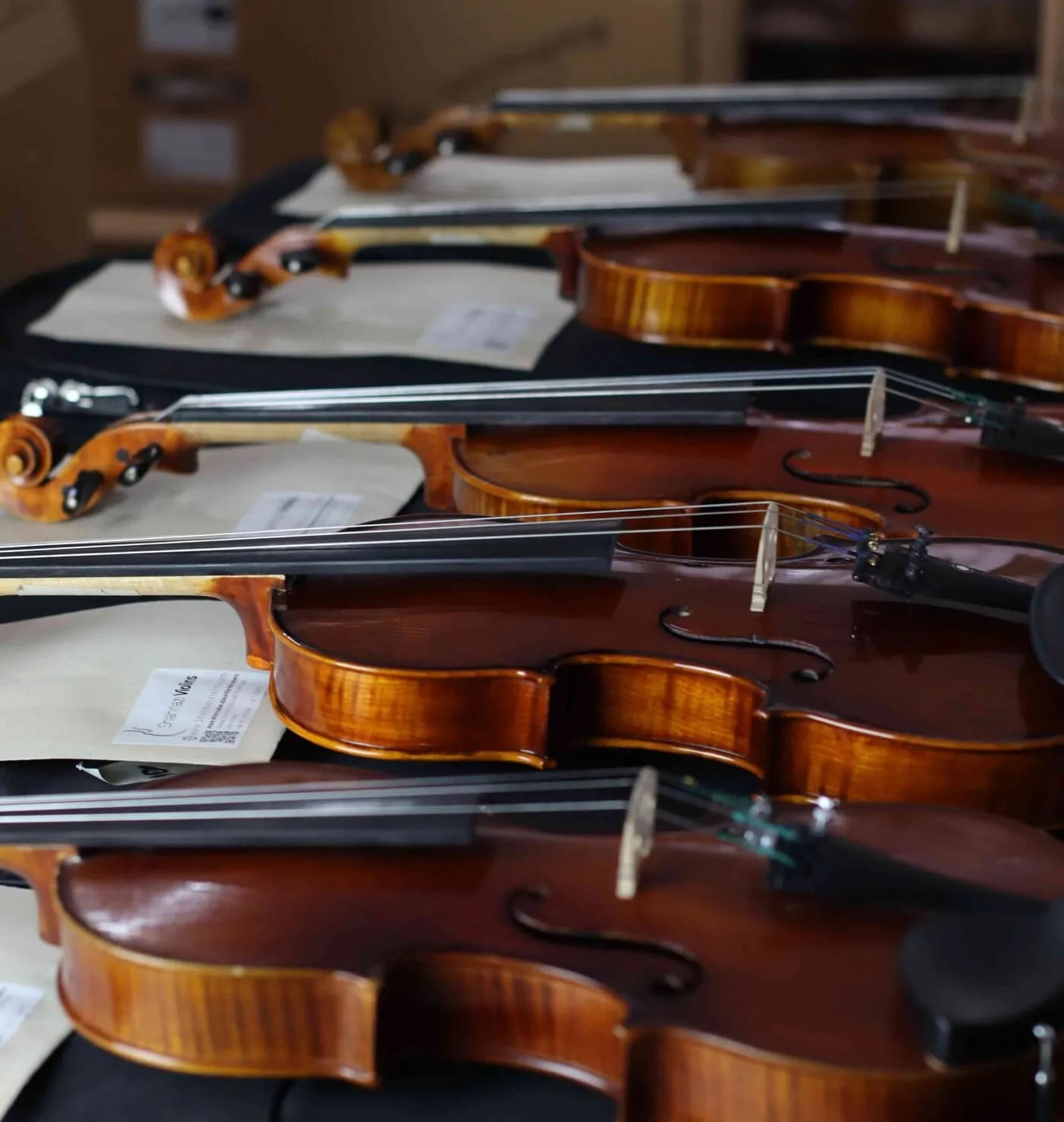
About the workshop
A workshop in Sabzevar, Iran, that builds handmade violins, sets up and restores existing instruments, and issues a certificate of authenticity and a warranty with every violin.
Violin maker and player — known as Shahnazi
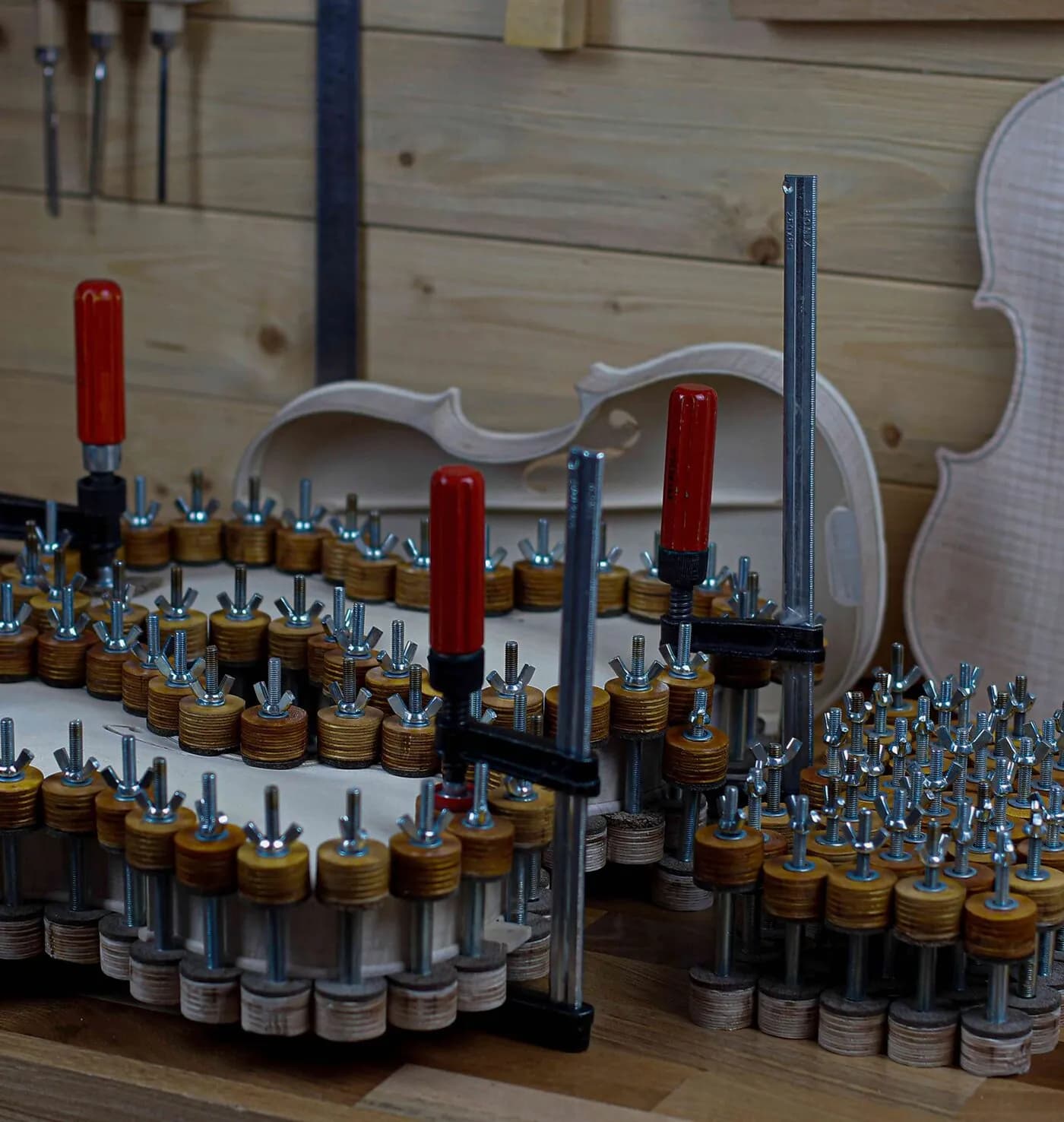
The workshop is built around one person who both makes violins and plays them. The two inform each other: a maker who has never held the instrument under their own chin does not know what a slightly thicker neck does after two hours of practice.
Every violin begins with choosing wood, not carving it. European timber rests in storage for years before it meets a blade, so the moisture settles and the sound stays stable. Rushing this stage produces an instrument that sounds different two years later.
The result is not a production line. Each instrument carries a serial number, a certificate of authenticity and the maker’s signature, and that certificate can be verified on this site.
years of wood drying
Timber that has rested for nearly two decades — its voice is deep and stable.
hours of handwork
From graduating the plates to the final setup, all by hand.
varnish layers
Thin oil varnish, layer by layer; colour and sound mature together.
violin levels
Harmony, Standard Professional, Orchestra and Soloist — for different stages of playing.
Building a handmade violin takes stages, and none of them can be shortened.
Spruce for the top, maple for the back and ribs. The wood rests for years before it is worked.
Every point on the plate has its own thickness; this is what determines response and power.
Neck angle and height directly affect the left hand and the tension under the strings.
Successive thin layers. Varnish is not only colour — it changes how the plate vibrates.
Bridge, soundpost, nut and string heights. This is the stage that makes an instrument playable.
Buying a violin is not a one-off transaction; the instrument stays with you and needs support.
Every instrument has a serial number and a certificate you can verify on this site.
A making warranty with clear, written terms.
We look after the instruments we build — that is what the setup packages and care plans are for.
As a player progresses, the previous instrument counts as credit towards the next one.
A violin has to be heard. Arrange a visit to the workshop or a trial of an instrument.
No. 2, 3rd Floor, Kashefi 26, Sabzevar, Iran